
Healthcare is no longer confined to hospitals and clinics.
Today, medicine is moving into our homes, onto our wrists, and even into our pockets. We are entering the era of digital health and wearable technology where continuous monitoring and smart devices are reshaping how we detect, track, and prevent disease.
This transformation is changing healthcare from a system based on occasional visits into one built on continuous insight and real-time data. Instead of reacting to illness after it appears, modern healthcare is becoming proactive, personalized, and always connected.
The Rise of Wearable Technology
In recent years, wearable devices have become part of everyday life. What started as simple fitness trackers has evolved into advanced health monitoring systems capable of capturing detailed physiological data throughout the day.
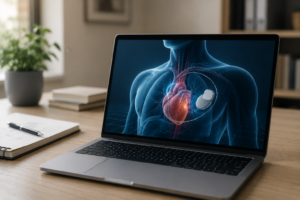
Modern wearables can measure heart rate, oxygen saturation, sleep quality, and even detect irregular heart rhythms. Some devices are now capable of identifying early warning signs of conditions such as atrial fibrillation or sleep disorders sometimes before symptoms become noticeable.
This continuous stream of real-time data creates a much broader understanding of an individual’s health. Instead of relying on a single measurement taken during a doctor’s visit, wearables provide a long-term view, revealing patterns and changes that develop gradually over time.
As a result, individuals are no longer passive recipients of care. They become active participants, equipped with insights that help them better understand and manage their own health.
At-Home Monitoring and Telemedicine
Digital health extends far beyond wearable devices. Advances in at-home monitoring have made it possible for patients to track important health indicators without visiting a clinic.
Devices designed for home use can measure blood pressure, glucose levels, heart activity, and respiratory function, with results that can be securely shared with healthcare providers. This allows doctors to monitor patients remotely and respond more quickly when changes occur.
At the same time, telemedicine has transformed how patients and clinicians interact. Virtual consultations have made healthcare more accessible, reducing the need for travel and making it easier for people in remote or underserved areas to receive medical attention.
Together, these technologies are reshaping healthcare delivery. Care is no longer limited to physical locations it becomes a continuous connection between patients and providers, regardless of distance.
Continuous Data and Preventive Care
One of the most powerful aspects of digital health is the ability to collect and analyze data continuously.
When health information is tracked over time, subtle patterns begin to emerge. Small changes in heart rate, sleep cycles, or respiratory function can indicate the early stages of a developing condition. These signals are often too gradual to detect during routine check-ups but become visible through continuous monitoring.
Artificial intelligence is increasingly being integrated into these systems, helping to interpret large volumes of health data. AI can identify patterns, generate insights, and provide early alerts that support both patients and clinicians in making informed decisions.
This combination of wearable sensors and intelligent analysis is shifting healthcare toward prevention. Instead of waiting for symptoms to appear, it becomes possible to detect risks earlier and take action before conditions progress.
A More Connected and Personalized Healthcare System
Digital health and wearable technology are not replacing doctors, they are extending care beyond traditional boundaries.
By providing continuous data and real-time insights, these technologies allow healthcare to become more connected and personalized. Patients gain a deeper understanding of their own health, while clinicians benefit from more comprehensive information when making decisions.
This shift is part of a broader transformation in medicine, where technology supports healthcare professionals in delivering more accurate, efficient, and accessible care.
The Future of Healthcare Is Continuous
We are entering a new era in which healthcare is no longer defined by appointments or hospital visits.
Instead, it is shaped by continuous monitoring, intelligent systems, and everyday data that provide ongoing insight into our health. The devices we wear and the technologies we use are becoming an integral part of how we maintain well-being.
As digital health continues to evolve, the focus of medicine will move further toward prevention, early detection, and personalized care.
The future of healthcare is not just in clinics – it is happening all around us, every day, helping us stay informed, aware, and one step ahead of disease.